Bear Paw Battlefield History
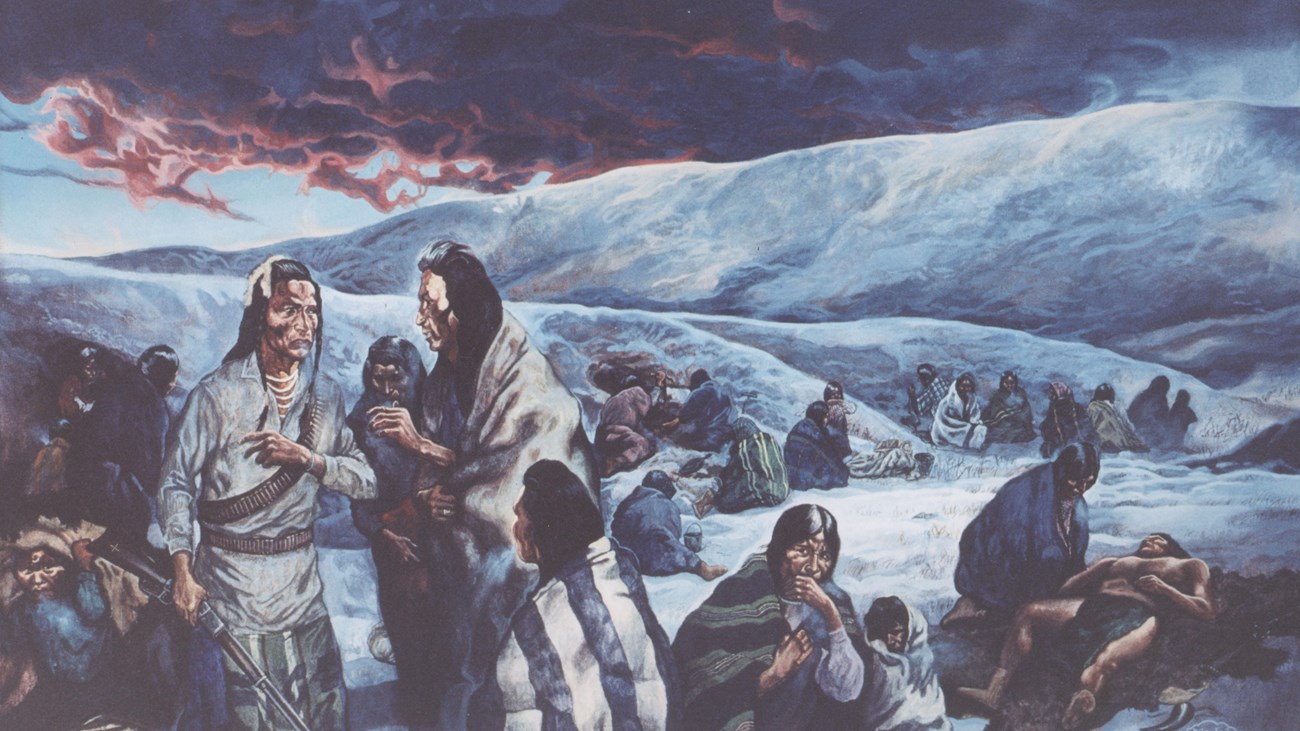
On September 30, 1877, Colonel Nelson Miles surprised the exhausted nimíipuu just forty miles from the Canadian border. For five days, warriors held the line while families huddled in hastily dug shelters. On October 5, Chief Joseph surrendered, uttering words that would echo through history: "From where the sun now stands, I will fight no more forever."
The Surprise Attack
The nimíipuu had camped at C'aynnim Alikinwaaspa (Place of the Manure Fire) to rest, hunt, and gather strength for the final push into Canada. They believed General Howard was still weeks away. But Colonel Miles had traveled 260 miles in just nine days. On the morning of September 30, a lookout spotted soldiers approaching. The cavalry attacked in two wings—one to capture the horse herd, the other charging the camp. Warriors immediately rushed to the bluffs and stopped the cavalry charge, preventing soldiers from reaching the families below.
Five Days of Siege
The battle quickly became a siege. The army held the heights but could not break through to the camp. Warriors dug in, defending their families. The captured horses meant the nimíipuu could not escape. Cold weather arrived—snow fell, water froze. Families used digging sticks and whatever tools they could find to excavate shelter pits. A terrible cost came on the first day: Chief Ollikut (Joseph's younger brother) and Chief Lean Elk were killed, along with 24 others. On October 2, Chief Looking Glass was shot and killed by a Crow scout. Despite these losses, the warriors held the line.
The Impossible Choice
As days passed, the situation became more desperate. Soldiers had cannons. Children were freezing. Warriors had fought brilliantly, but General Howard arrived with more troops. Hope that Sitting Bull and Canadian allies would help faded. On October 5, Joseph met with Miles and Howard. He was told his people could be saved by ending the fight, promised they would not be executed, and given hope they might return home. Joseph returned to camp and faced an agonizing decision with his people.
Joseph's Surrender Speech
At 2 p.m. on October 5, Joseph handed his rifle to Colonel Miles and made his immortal speech:
"I am tired of fighting. Our chiefs are killed. Looking Glass is dead. Tulhuulhulsuit is dead. The old men are all dead. It is the young men who say 'Yes' or 'No'. He who led the young men is dead. It is cold, and we have no blankets. The little children are freezing to death. My people, some of them, have run away to the hills, and have no blankets, no food. No one knows where they are, perhaps freezing to death. I want to have time to look for my children, and see how many of them I can find. Maybe I shall find them among the dead. Hear me, my chiefs. I am tired. My heart is sick and sad. From where the sun now stands, I will fight no more forever."
The Aftermath
About 400 nimíipuu surrendered that day, turning their weapons to Miles. But not all. That night, Chief White Bird led approximately 30 warriors and between 200 and 300 others north across the border into Canada. The 126-day flight had officially ended, but the suffering of the nimíipuu—those captured and those who escaped—was far from over. The Flight of 1877 stands as one of history's greatest acts of resistance and courage, and Bear Paw as the place where an impossible journey reached its heartbreaking end.