Old Chief Joseph Gravesite History
At the base of Lake Wallowa, overlooking the lands he fought to protect, lies the grave of Tıwi·teqıs (Old Chief Joseph), father of the leader who guided the Nez Perce during the 1877 conflict.
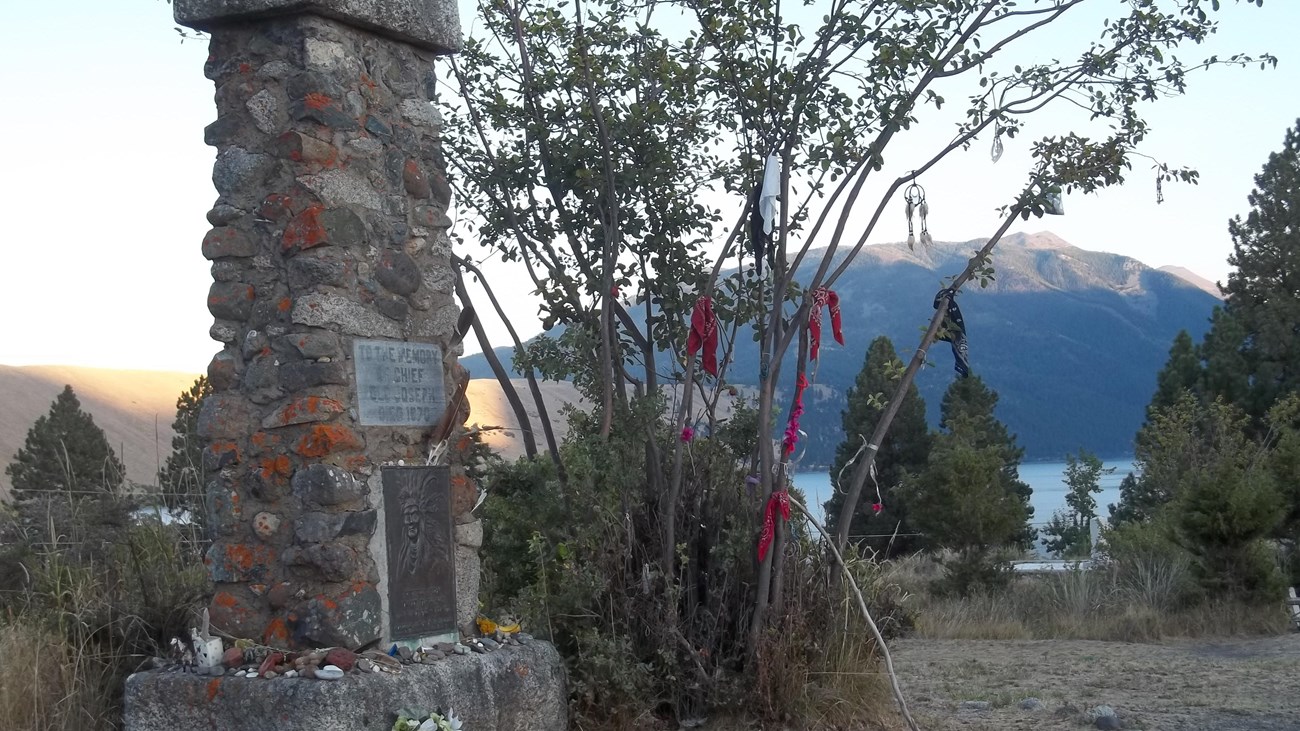
A Leader's Stand
Tıwi·teqıs was born between 1785 and 1790 and became a powerful leader of the Nez Perce bands living in the Wallowa Valley. He signed the Treaty of 1855, hoping to preserve at least a portion of the homeland. When the Treaty of 1863 — the "Steal Treaty" — was proposed, Tıwi·teqıs refused to sign. He would not abandon the bones of his ancestors.
Tıwi·teqıs died in 1871, before he could see the full consequences of his refusal. But not before compelling his son to hold fast to the valley. "Never forget my dying words," he told young Chief Joseph. "This country holds your father's body. Never sell the bones of your father and mother."
Honoring Memory
When Tıwi·teqıs died, he was buried in the valley he loved. But after the Nez Perce were forced to flee in 1877, his grave was desecrated. For decades, settlers occupied the land and settlers lobbied for his remains to be reburied with dignity. In 1926, community leaders brought Tıwi·teqıs back to rest at the base of Lake Wallowa. Two thousand five hundred people gathered to witness his reinterment.
Over a century has passed since the Nez Perce were driven from the valley. The grave of Tıwi·teqıs remains — a tangible link between the people and the place that still holds deep meaning for them.